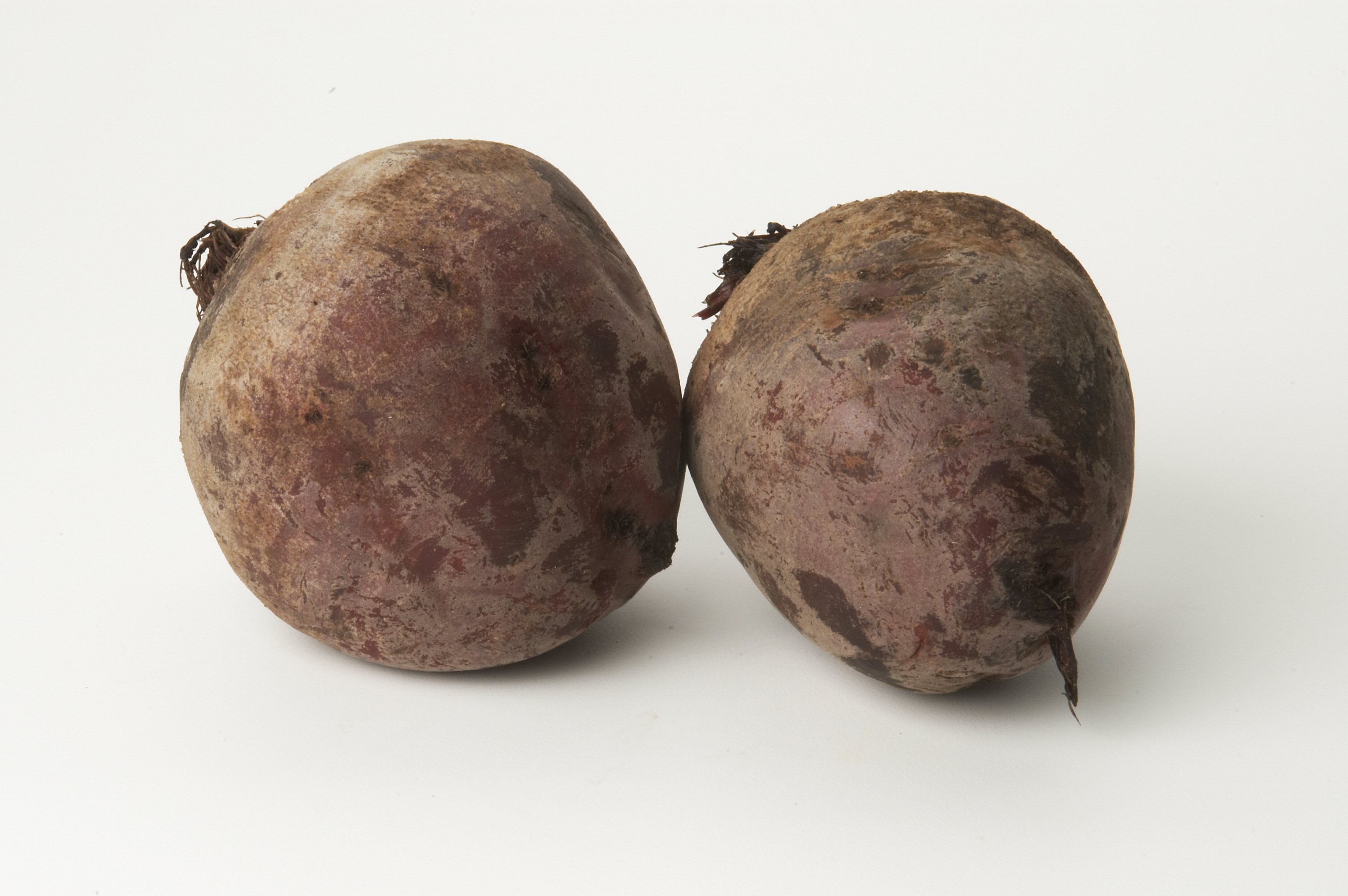
Red Beets
Product Description:
Usage: Boiled, pickled or in salads. Can be added to soups, baked or fried. Beet tops can be used like spinach.
Selection: Good quality beets will be relatively smooth, firm and small-sized. Bulk beets should be firm and not too dark-colored. Beets with the greens still attached assures the freshest product. Fresh beet greens should have bright green leaves with red veins running through them.
Avoid: Avoid beets that are dark red to the point of almost being black or soft globes with rough pock-marked skin. Other signs to watch out for are leaves that are limp and wilted looking or dark green with spots of yellow or slime.
Seasonal Information
Beets are available year-round. While California is the largest supplier of beets, they are grown commercially in 31 states.
Beet Nutritional Information
Serving Size: 1 cup(136g), raw
Amount Per Serving
Calories 58 Calories from Fat 2
% Daily Value*
Total Fat 0
0%
Cholesterol 0mg
0%
Sodium 106mg
4%
Total Carbohydrate 13g
4%
Dietary Fiber 4g
15%
Sugars 9g
Protein 2g
6%
Vitamin A 1%
Vitamin C 11%
Calcium 2%
Iron 6%
*Percent Daily Values are based on a 2,000 calorie diet. Your daily values may be higher or lower depending on your calorie needs.
Source: PMA’s Labeling Facts
Beets are very low in Saturated Fat and Cholesterol. They’re also a good source of Vitamin C, Iron and Magnesium, and a very good source of Dietary Fiber, Folate, Potassium and Manganese.
Product content provided by Produce Oasis