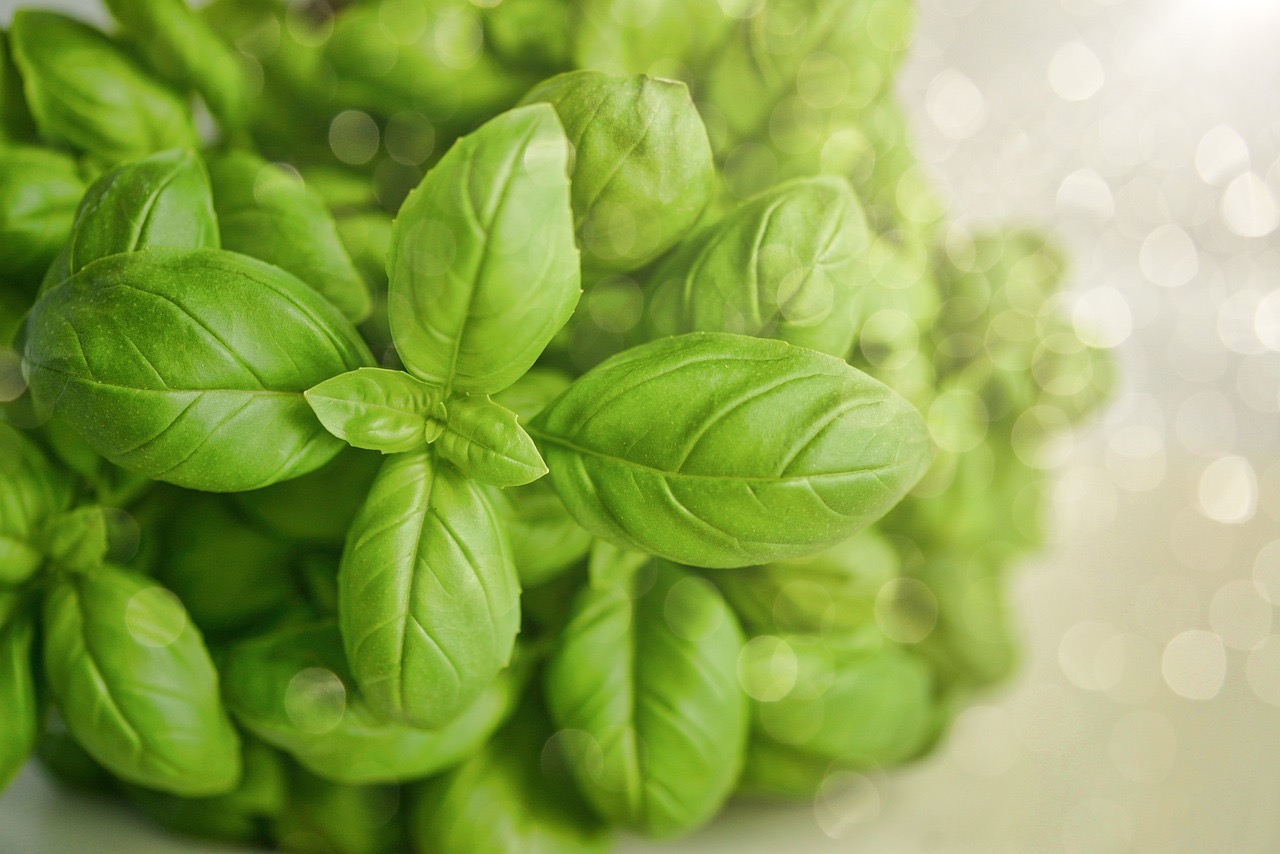
Basil
Product Description:
Usage:
Use in pasta, poultry & seafood dishes.
Selection & Storage:
Basil has a pungent flavor and clove-like aroma. In general, herbs should be fresh looking, crisp and brightly-colored. Leaves will vary in color from green to reddish-purple.
If you are not going to use basil the same day you buy it, do not store it in the refrigerator. Temperatures below 48 F will turn basil black. Instead, put the stems into a glass of water as you would a plant cutting.
Avoid:
Avoid herbs that are wilted, have dry brown areas, or are pale or yellow in color. Slimy looking dark spots with small areas of mold indicate old product or poor handling.
Seasonal Information:
Available year-round.
Basil Tips & Trivia:
- There are more than twelve varieties of basil that are cultivated for culinary use. Sweet Basil, and its close relative Genoa Basil – are the most familiar varieties. Both produce fragrant, broad, deep green leaves in abundance. Their spiciness is the perfect compliment to ripe red tomatoes and soft cheeses such as fresh mozzarella and brie.
- The name basil comes from the Greek, meaning “kingly”. The herb itself originates in India, where is has long been considered sacred. In ancient Rome, the name for the herb, Basilescus, referred to Basilisk, the fire breathing dragon. Taking the herb was thought to be the charm against the beast.
Product content provided by Produce Oasis