

Asparagus
Product Description:
Usage:
Raw in salads; Steamed or microwaved.
Selection:
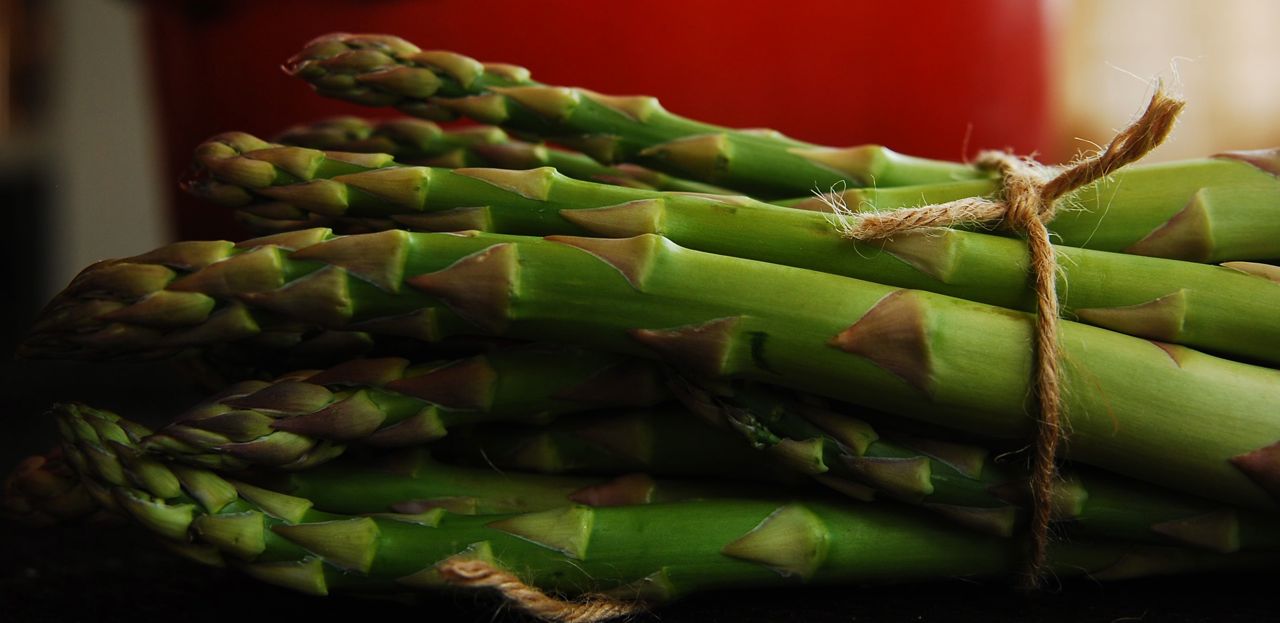
High quality asparagus has tender stalks that are nearly completely green (except for the white asparagus variety). Tender stalks will usually be medium-sized and the tips will be firmly closed. Do not skip buying asparagus simply because the stalks are fairly thick – simply peel and cook as you normally would!
Avoid:
Avoid asparagus with wrinkled stalks and wilted tips. Also avoid stalks that are too thin.
Seasonal Information:
- Asparagus is available year-round with a peak during March and April.
- California provides most of the supply February through April.
- Michigan and Washington contribute during April, May and June.
- Oregon, Illinois, Arizona, New Jersey and Idaho are among 20 other states involved in production.
- Chile and Mexico also are large suppliers during off-peak months (July through December).
Asparagus Nutritional Information:
Serving Size: 134g
Amount Per Serving:
Calories 33 Calories from Fat 1
% Daily Value*
Total Fat 0 0%
Cholesterol 0mg 0%
Sodium 3mg 0%
Total Carbohydrate 5g 2%
Dietary Fiber 3g 11%
Sugars 3g
Protein 3g
Vitamin A 20%
Vitamin C 13%
Calcium 3%
Iron 16%
*Percent Daily Values are based on a 2,000 calorie diet. Your daily values may be higher or lower depending on your calorie needs.
Source:
PMA’s Labeling Facts
Asparagus is low in Saturated Fat, and very low in Cholesterol and Sodium. It’s also an excellent source of Protein, Niacin, Vitamin B6, Pantothenic Acid, Magnesium, Zinc and Selenium, and a great source of Dietary Fiber, Vitamin A, Vitamin C, Vitamin E (Alpha Tocopherol), Vitamin K, Thiamin, Riboflavin, Folate, Iron, Phosphorus, Potassium, Copper and Manganese.
Asparagus Tips & Trivia:
- To keep asparagus fresh, cut 1/2 inch off of the base of the stalk and stand the asparagus upright in an inch of warm water (do not let the tips soak in water!). This will also revive asparagus that looks wilted and limp.
- For an elegant appetizer or spring salad, steam asparagus, sprinkle with red wine or Balsamic vinegar and refrigerate. When ready to serve, top with chopped toasted almonds.
- Today’s asparagus has been bred from wild plants that were native to western and central Asia and central Europe. Asparagus has always been considered a luxury vegetable, highly prized in ancient Rome, Egypt and Greece. In Europe, its popularity flourished under the reign of Louis XIV of France, a devotee who encouraged its production.
Product content provided by Produce Oasis