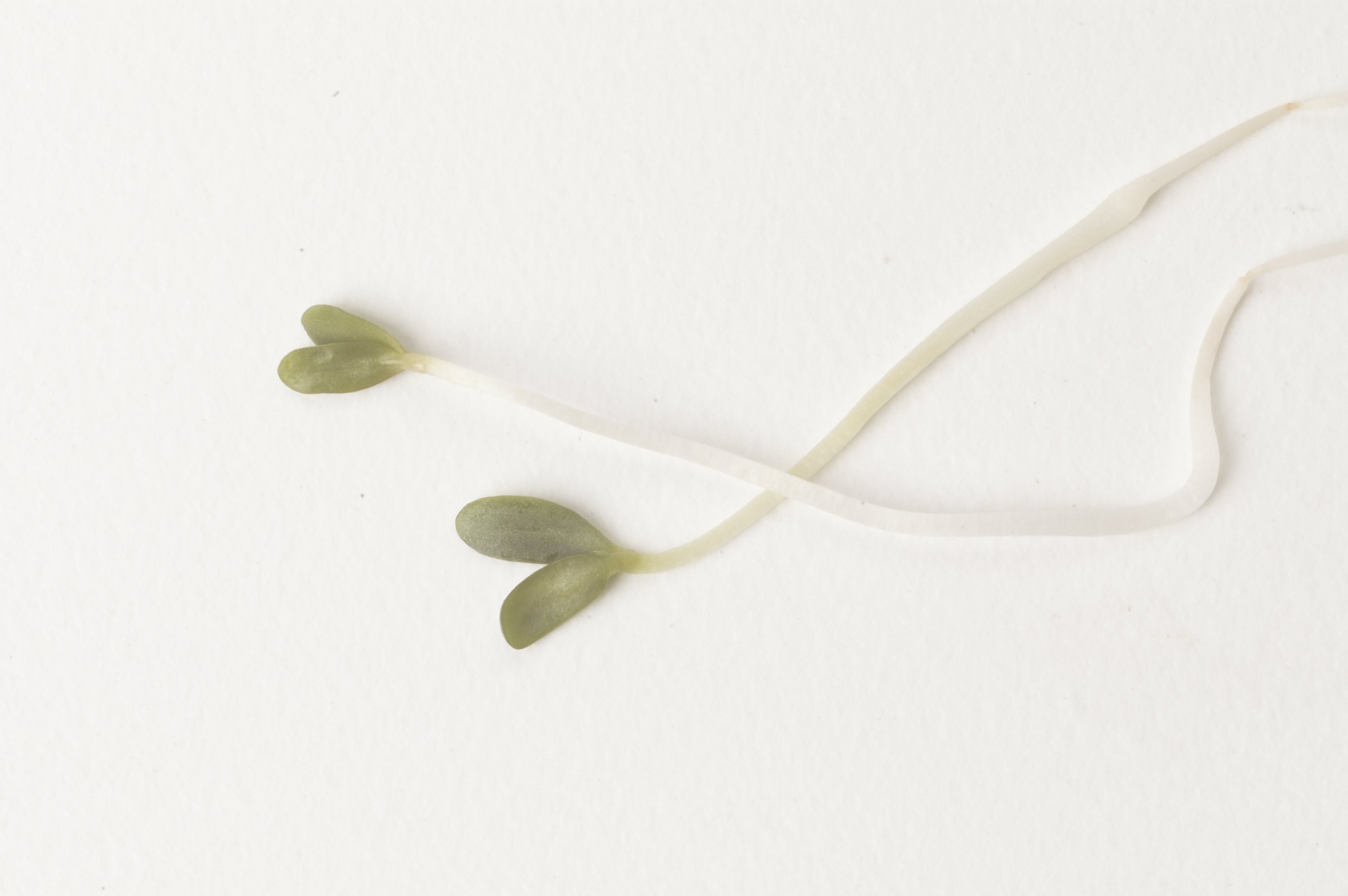
Alfalfa Sprouts

Alfalfa Sprout

Product Description:

Usage:
Used in salads and as a garnish for entrees.

Selection:
Good-quality alfalfa sprouts will be crisp-looking and brightly colored. The roots will be white but the leaves can vary in color including yellow, light or dark-green. Coloring varies due to exposure to light.

Avoid:
Avoid product that is brown, or that has dry and wilted roots. Milky-white or yellow water in the bottom of the container is a sign of old product or poor refrigeration.

Seasonal Information:

  • Alfalfa is available year-round and usually grown locally.

Alfalfa Sprout (Raw) Nutritional Information:

Serving Size:33g

Macronutrients:

Water: 30.08 g
Calories: 10
Protein: 1.32 g
Carbohydrates: 1.25 g
Fiber: 0.8 g
Sugars: 0.06 g
Total Fat: 0.23 g
Saturated Fat: 0.023 g
Monounsaturated Fat: 0.018 g
Polyunsaturated Fat: 0.135 g
Cholesterol: 0 mg

Micronutrients:

Calcium: 11 mg
Iron: 0.32 g
Magnesium: 9 mg
Phosphorus: 23 mg
Potassium: 26 mg
Sodium: 2 mg
Zinc: 0.30 mg
Vitamin C: 2.7 mg
Thiamin: 0.025 mg
Riboflavin: 0.042 mg
Niacin: 0.159 mg
Pantothenic Acid: 0.186 mg
Vitamin B6: 0.011 mg
Vitamin B12: 0 mcg
Folate: 12 mcg
Vitamin A: 51 IU
Vitamin E: 0.01 mg
Vitamin K: 10.1 mcg

Phytonutrients:

beta Carotene: 29 mcg
beta Cryptoxanthin: 2 mcg
Lycopene: 0 mcg
Lutein and Zeaxanthin: 0 mcg

Alfalfa Sprout Tips & Trivia:

  1. The alfalfa plant probably originated in the Near East. It came to the Eastern United States with the early colonists and to the Western United States via Chilean gold seekers at the time of the California gold rush, when it was known as Chilean clover.
  2. Alfalfa is a remarkably nutritious plant, grown for forage longer than any other.


View All Products


Product content provided by Produce Oasis
Quality Produce